

When Competition Becomes Cooperation: HIV and Chlamydia Promote Their Mutual Survival in macrophages
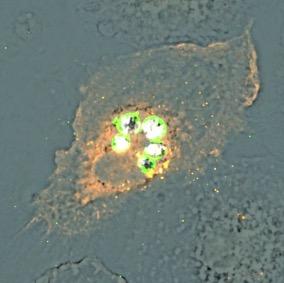
Chlamydia trachomatis is the most common bacterial agent responsible for sexually transmitted diseases worldwide, causing over 100 million new infections annually. It is estimated that 3% to 20% of new HIV-1 infections are attributable to co-infections with Chlamydia or the gonococcus. While these co-infections are well-documented epidemiologically, little is known about how the two pathogens coexist at the tissue or cellular level.
This study focused on macrophages, sentinel cells of the immune system normally tasked with eliminating pathogenic microbes. In this instance, however, macrophages serve as targets for both HIV-1 and Chlamydia, as both pathogens strictly require these cells for replication.
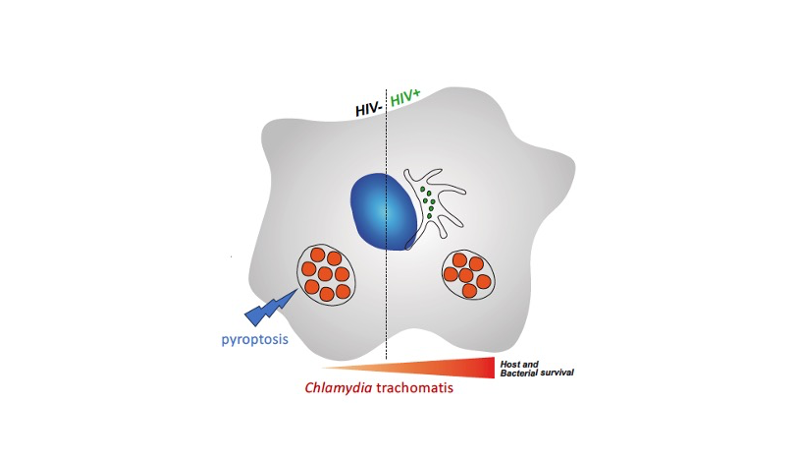
Typically, Chlamydia infection triggers a robust inflammatory response that leads to the death of the infected macrophage. This study demonstrated that HIV inhibits this inflammatory cell-death pathway, thereby allowing the co-infected host cell to survive. Consequently, HIV and Chlamydia bacteria appear to trade rapid replication for long-term persistence. By preventing the death of the co-infected macrophage, both pathogens create a safer intracellular environment where they can survive for extended periods. These findings reveal a previously unknown strategy by which a virus and a bacterium can promote their own long-term infections.
This study sheds new light on the biological basis of the frequent association between HIV and Chlamydia infections and highlights the role of macrophages as significant reservoirs for chronic infections. Thus, these immune cells emerge as potential targets for future therapies aimed at limiting persistent sexually transmitted infections.
To know more
Reference : HIV-1 and Chlamydia trachomatis limit their respective growth but promote their survival in co-infected human macrophages. Mariano Alonso Bivou*, Floriane Herit*, Thibault Leray, Quentin Provôt, Maria-Teresa Damiani# and Florence Niedergang#
https://doi.org/10.1128/msphere.00196-26


