

GPCR-VP: a new prediction tool to decipher GLP1R variants and predict their functional effects.
Genetic variations in GLP1R can influence receptor function, susceptibility to metabolic diseases, and response to current drug-based therapies targeting this receptor. Although several loss-of-function GLP1R variants have been identified experimentally, the vast majority of variants observed in human populations remain functionally undefined. Existing computational predictive tools, including the most powerful ones, such as AlphaMissense and REVEL, have not been specifically designed for GPCRs and therefore may show reduced accuracy when applied to membrane proteins like GPCRs.
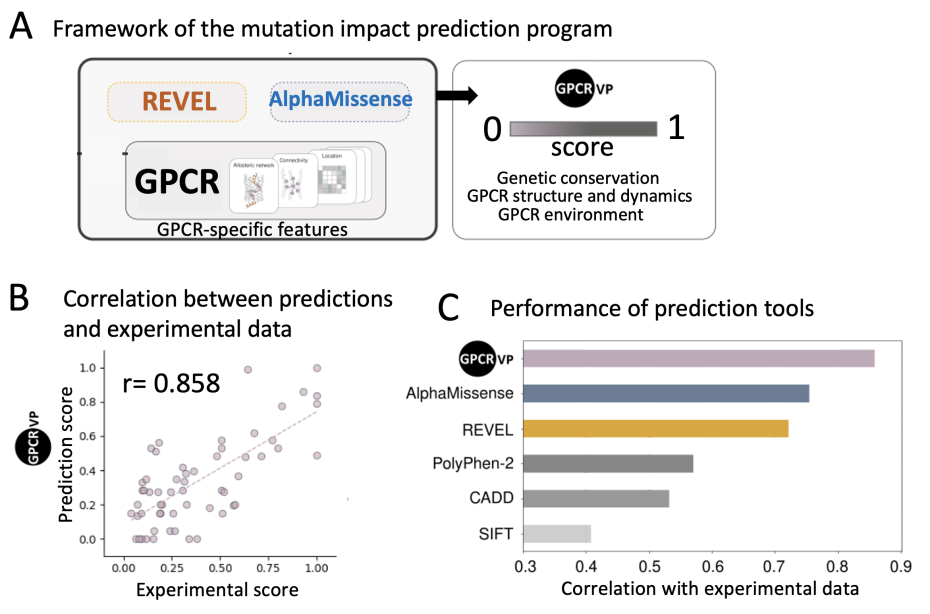
The authors developed the GPCR-VP, a variant impact prediction tool specifically designed for GLP1R. This tool integrates both the existing prediction scores, but also the membrane environment of the GPCRs with the structural and functional characteristics of these receptors derived from molecular dynamics. The GPCR-VP showed better agreement with experimental functional data and significantly reduced false-positive predictions compared to AlphaMissense and REVEL, both during model development and in the two independent validation steps. The application of GPCR-VP to all known human variants of GLP1R generated a comprehensive mapping of predicted functional effects at the receptor scale.
GPCR-VP allows for the interpretation of genetic variations in GLP1R and could support precision medicine approaches in type 2 diabetes and obesity. Better identification of variants with functional impact could facilitate patient stratification, inform therapeutic decision-making, and guide future experimental studies on the biology of GLP1R.
In conclusion, the results of this study demonstrate that the integration of structural and dynamic information specific to GPCRs can considerably improve the prediction of the functional consequences of genetic variations on these GPCRs. The researchers have thus developed GPCR-VP, a tool capable of predicting the impact of GLP1R variants on receptor function. This breakthrough could help explain why some patients respond better than others to obesity and diabetes treatments, but also guide the choice of the most suitable treatment for each patient.
More accurate and biologically more relevant than current generalist predictors, GPCR-VP improves the interpretation of GLP1R variants and paves the way for the development of similar prediction tools for other GPCRs involved in human diseases.
Reference of the article: Marta Lopez-Balastegui et al, in Diabetologia
"GPCRVP score reliably predicts impact of GLP1R human variants on receptor function”
https://link.springer.com/article/10.1007/s00125-026-06859-3