



Membres de l'équipe





Projets


Publications
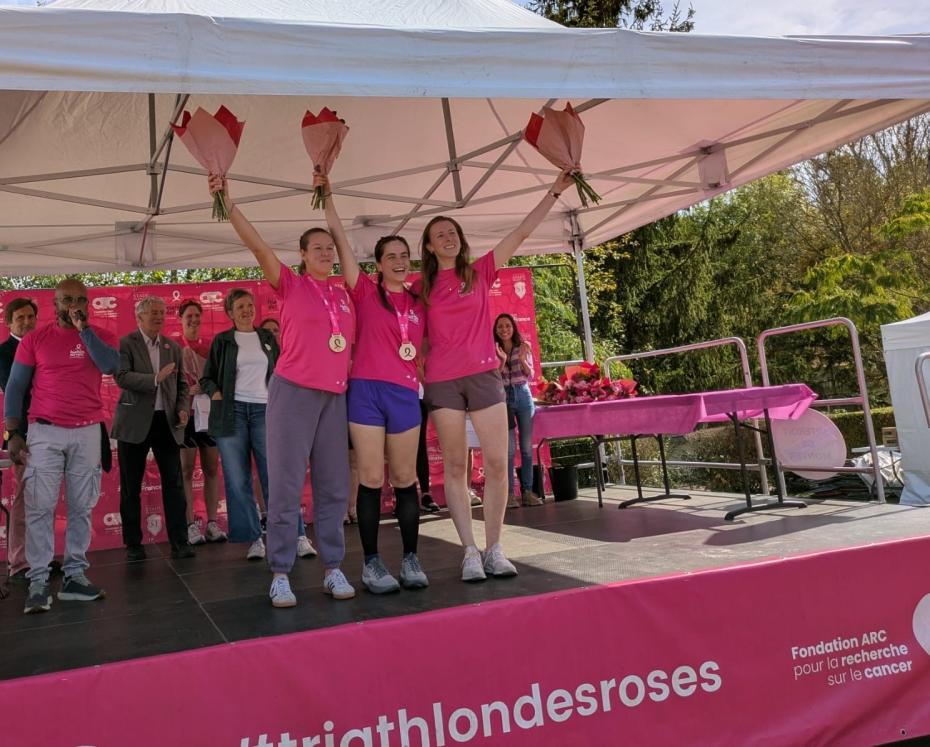
Participation de l'équipe au Triathlon des Roses
Un grand merci aux organisateurs pour cet événement engagé, ainsi qu’à toutes les personnes qui se mobilisent et contribuent, chacune à leur manière, à faire avancer cette cause.
Financements








Contacts
Vie de l'équipe & Faits marquants
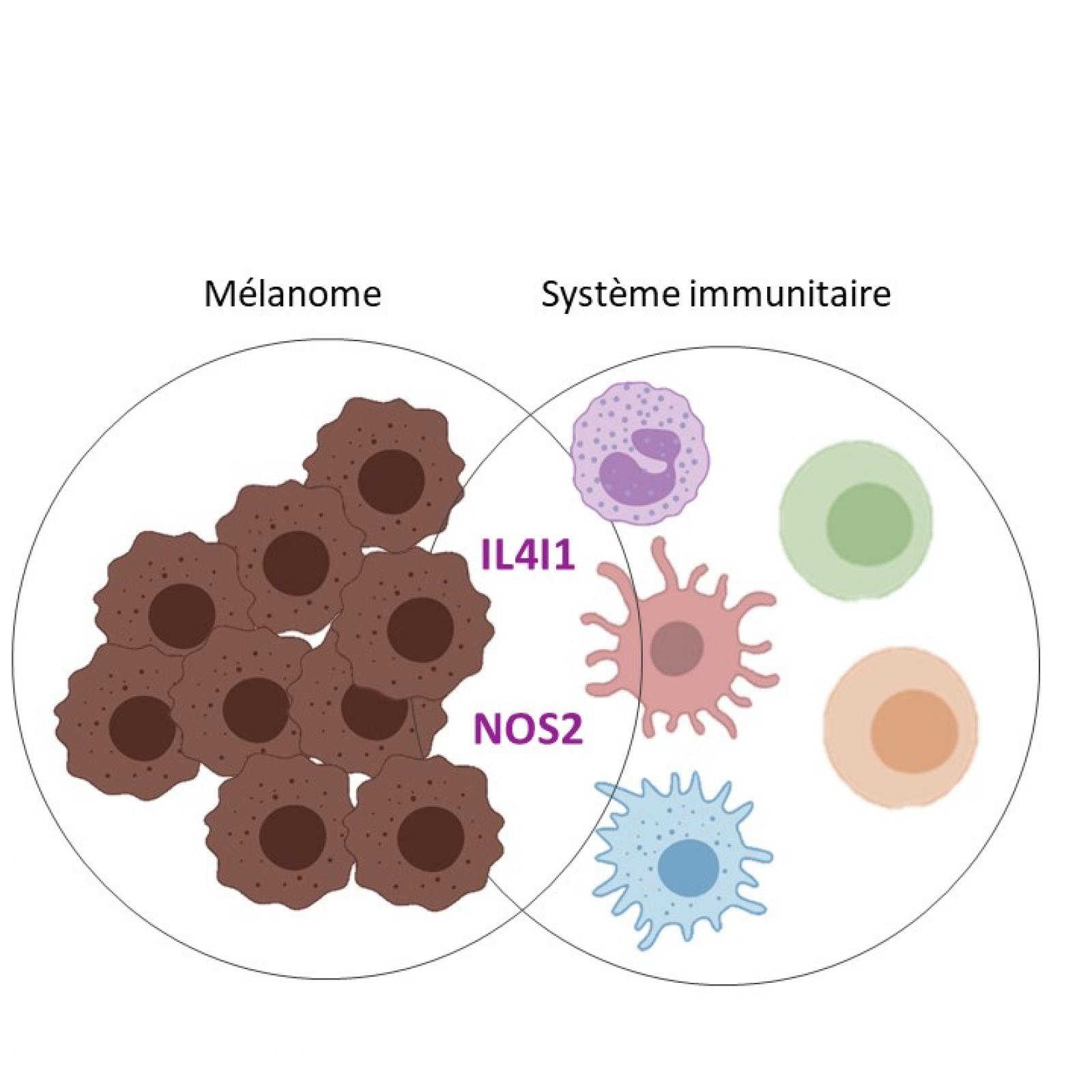
Seradj M, Kari S, Llebaria Fabrias A, Rouault A, Herrmann A, Lengagne R, Kato M, Castellano F, Molinier-Frenkel V, Llebaria A, Bercovici N and A Prévost-Blondel. Conditional IL4I1 inactivation triggers tumor-associated macrophage reprogramming and CD8+ T cell reactivation. Cancer Immunol Res. CIR-24-1159. 2026.PMID: 41537775
- This study uncovered a key role for IL4I1 in maintaining an immunosuppressive tumor microenvironment. We showed that targeting IL4I1 in macrophages restores antitumor immune responses through coordinated effects on tumor-associated macrophages and CD8⁺ T cells, highlighting its potential as a novel immunotherapy target.
Fumagalli M, An D, Simula L, Combe C, Aziez L, Simoni Y, Alves-Guerra MC, Valentini A, Marchais M, Vermare A, Moraly J, Manni S, Quadraccia MC, Quintarelli C, De Angelis B, Bercovici N, Donnadieu E, Pendino F. An in vivo CRISPR screen unveils promising target genes to improve CAR-T cell efficacy in a solid tumor model. Mol Ther. S1525-0016(26)00274-1. 2026.
- Through a focused competitive CRISPR knockout screen in a human lung tumor model, we compared the relative efficacy of 50 gene targets proposed to enhance CAR-T cell persistence in vivo. Our screen identified some genes (ZC3H12A, SOCS1, PTPN2, and CDKN2A) as the most robust targets in this solid-tumor setting. Surprisingly, other gene edits (MED12) exhibited pro-, neutral, or anti-proliferative effects depending on the tumor context, demonstrating that the impact of gene editing on CAR-T cell persistence is highly context-dependent.
Zilio S, Rouault A, Seraj M, Marigo I, Prévost-Blondel A, Peranzoni E and N Bercovici. Beyond density: mapping the functional landscapes of macrophage-T lymphocyte niches in the tumor microenvironment. Front Immunol. DOI 10.3389/fimmu.2026.1851873.
- Our review synthesizes emerging evidence that the spatial and functional organization of macrophage–T cell niches is a major determinant of antitumor immunity. It outlines how deciphering these immune ecosystems may reveal new biomarkers and therapeutic strategies to improve cancer immunotherapy.


